


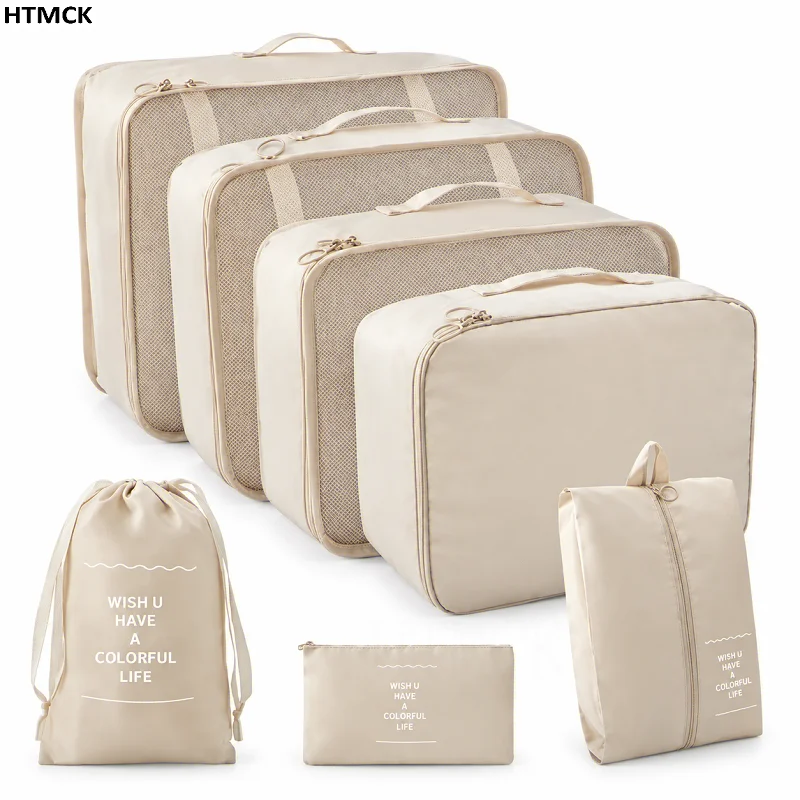

Packing cubes solve organisation first and space second. Compression versions do claw back volume, but they add weight and crease clothing — so the right answer depends on trip type, not on buying the biggest set available.
Compression or standard?
Compression cubes have a second zip that squeezes the load flat. Realistically they recover 15–25% of a cube's volume, which is meaningful in a carry-on and irrelevant in a large checked case.
Standard cubes keep a bag organised without adding much weight. For most people, two or three standards plus one compression cube is the sweet spot.
What separates good from bad
- Ripstop nylon or coated polyester — light, and it does not fray at the seams.
- Smooth, chunky zips. A cube is only as good as its zip; cheap ones snag on fabric.
- Mesh top panels so you can see contents without opening everything.
- Grab handles on the long edge — small detail, big difference when repacking.
- Weight per piece. A six-piece set can cost 400–500 g of a 7 kg cabin allowance.
Setups by trip
- Carry-on, one hotel: two cubes (tops, small items) plus a flat cable pouch.
- Multi-stop: one cube per clothing type, so you unpack a layer rather than the bag.
- Family luggage: one colour per traveller — this is where cubes earn their weight.
- Duffel or soft backpack: cubes restore structure a floppy bag lacks.
What to skip
Vacuum bags (they need a pump, they leak, and they crease everything), oversized "shoe organisers" that only fit one pair, and cubes with rigid plastic frames that waste the corners of your case.
How many cubes do you actually need?
Count outfit types, not days. A week of travel usually means three cube loads: tops, bottoms, small items — plus a flat pouch for cables and a shoe bag. Six-piece sets look like value and mostly stay at home; buy three good cubes, add more only if you find yourself short.
Sizes that fit a cabin case: medium (35 × 25 × 10 cm) for tops, small (25 × 15 × 10 cm) for underwear and socks, slim (35 × 12 × 10 cm) for chargers and cables.
Packing order that works
Put the heaviest, least-used cube at the bottom of the case, the medium cube in the middle, and the small cube on top nearest the lid. Compression cubes go in the middle where their flat sides stack. Leave one edge of the case free for shoes and a toiletry bag — cubes that fill every corner make a case impossible to close without repacking.
How this page is built
Titles, images and prices come from our partner product feed, refreshed daily and stamped with the update date. We never mark prices up and we do not sell: the buying link goes to the seller, who handles payment, shipping and returns. Read the packing cubes guide for the packing method these cubes are designed around.